
Chia vs Flax vs Sabja Seeds: Which Is Right for You?
By HarvestHavenGoods · Updated 29 October 2026 · 7 min read
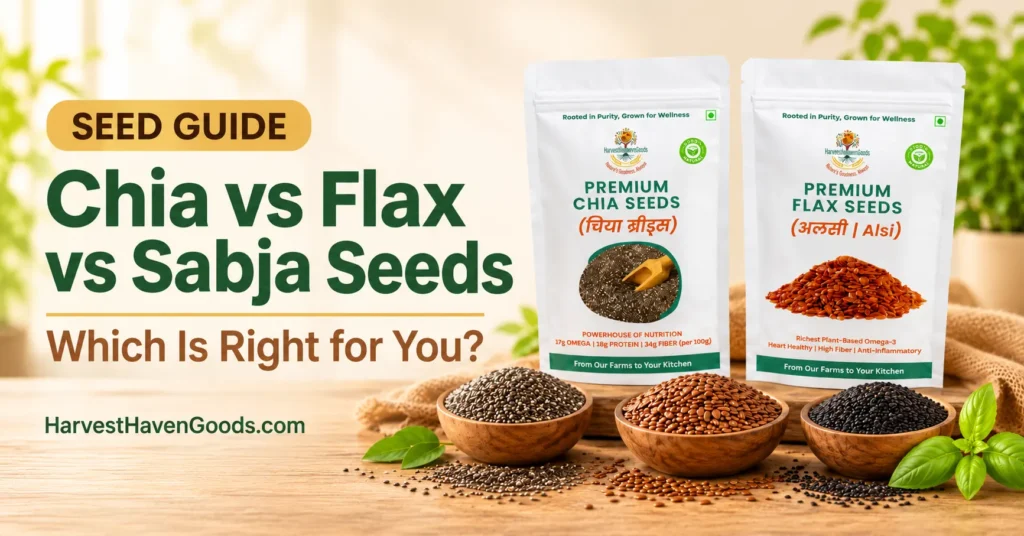
Three tiny seeds. Three very different strengths. Here is how to pick the one that fits your goal, your kitchen and your budget.
Quick answer: Choose chia seeds for all-round nutrition and easy use, flax seeds (alsi) for the highest plant omega-3 and heart-friendly lignans, and sabja seeds for cooling, light drinks like falooda and lemon water. You do not have to choose only one. Many Indian households rotate all three.
What are chia, flax and sabja seeds?
People often mix these seeds up because all three are small and form a jelly-like coating in water. They are, however, three different plants.
- Chia seeds come from Salvia hispanica, a plant from the mint family. They are tiny, grey-black and have a mild, neutral taste.
- Flax seeds (alsi, अलसी) come from Linum usitatissimum. They are flat, glossy and brown, with a nutty flavour. Alsi has been part of Indian kitchens for generations, from alsi ladoo to chutneys.
- Sabja seeds (basil seeds, सब्जा) come from sweet basil, Ocimum basilicum. They are jet black, slightly larger than chia, and swell much faster in water.
Chia vs flax vs sabja: side-by-side comparison
| Feature | Chia seeds | Flax seeds (alsi) | Sabja seeds |
|---|---|---|---|
| Plant | Salvia hispanica | Linum usitatissimum | Ocimum basilicum (basil) |
| Energy (per 100 g, approx.) | ~486 kcal | ~534 kcal | ~ 400–450 kcal* |
| Fiber | Very high (~34 g) | High (~27 g) | High* |
| Protein | ~17 g | ~18 g | Moderate* |
| Plant omega-3 (ALA) | High (~17 g) | Highest (~22 g) | Lower than chia and flax* |
| Special plus | Calcium, antioxidants | Lignans | Cooling, quick-soaking |
| Soaking time | 15–30 min | Not needed (grind instead) | 10–15 min |
| Taste | Neutral | Nutty | Mild, slightly herbal |
| Best for | Puddings, smoothies, overnight oats | Rotis, ladoo, smoothies | Falooda, sherbet, lemon water |
Values are approximate and vary by source and batch. *Basil seed data varies widely between studies, so treat it as a rough guide. Please check each pack's nutrition label for exact numbers.
Chia seeds: the all-rounder
Best all-roundIf you want one seed that does a bit of everything, chia is the easiest place to start. A small spoonful gives you fiber, plant protein, calcium and omega-3 fats. Chia can be eaten whole, so there is no grinding, and the neutral taste blends into almost anything.
Benefits people look for in chia
- Very high fiber, which keeps you full for longer and supports digestion
- Plant-based omega-3 (ALA) for everyday heart and brain nutrition
- Good plant source of calcium, magnesium and phosphorus
- Gel texture that makes puddings, jams and egg-free baking easy
Explore our Premium Chia Seeds and other superfood seeds.
Flax seeds (alsi): the omega-3 champion
Highest omega-3Flax is among the richest plant sources of ALA omega-3 and is also known for lignans, plant compounds with antioxidant properties. It is also budget-friendly, which is why alsi is popular for daily use.
One important rule: grind your flax
Whole flax seeds have a tough outer shell and can pass through your gut mostly undigested. Dry-grind small batches in a mixer, then store the powder in the fridge and use it within about a week. If you prefer convenience, try ready flax seed powder.
Benefits people look for in flax
- Top plant source of omega-3 (ALA)
- Rich in lignans and dietary fiber
- Easy to add to rotis, parathas, ladoo, curd and smoothies
- Works as an egg substitute: 1 tbsp ground flax + 3 tbsp water
Sabja seeds: the cooling summer seed
Cooling & lightSabja (basil) seeds are a classic in Indian summer drinks. In traditional Ayurvedic practice they are considered cooling, which is why they appear in falooda, rose sherbet, lemon water and kulfi. They swell into a soft, bubble-like jelly within minutes.
Benefits people look for in sabja
- Fiber that supports digestion and a feeling of fullness
- Quick to soak and light on the stomach
- Makes drinks and desserts feel special with almost no effort
Which seed should you choose?
Pick chia if you…
- Want one simple daily seed
- Love overnight oats and puddings
- Need extra fiber and calcium
Pick flax if you…
- Want the most omega-3 per rupee
- Cook with rotis, ladoo or chutneys
- Don't mind grinding fresh
Pick sabja if you…
- Want a cooling summer drink
- Make falooda or sherbet
- Like a light, quick-soak seed
By goal
- Weight management: chia or sabja in water before meals can help you feel full. Flax adds fiber and protein to meals. No seed works alone, so pair them with a balanced diet and activity.
- Heart-friendly nutrition: flax and chia, thanks to omega-3 (ALA) and fiber.
- Digestion: all three add fiber. Start with 1 teaspoon and increase slowly with plenty of water.
- Summer cooling: sabja.
- Vegetarian and vegan diets: chia and flax are handy plant-based omega-3 sources.
How to eat chia, flax and sabja seeds
- Chia pudding: 2 tbsp chia + 1 cup milk, rest overnight, top with fruit.
- Flax roti: mix 1–2 tbsp ground flax into atta dough.
- Sabja lemon water: soak 1 tsp sabja for 15 minutes, add to chilled lemon water with honey or jaggery.
- Seed smoothie: blend 1 tsp each of chia and ground flax with banana, spinach and milk.
- Egg replacer in baking: use ground flax or soaked chia gel.
Typical daily amounts
Many people take about 1–2 tablespoons of chia or ground flax and 1 teaspoon of soaked sabja a day. Begin with less, drink enough water and increase gradually to avoid bloating.
How to store them
Keep seeds in an airtight container in a cool, dry place away from sunlight. Ground flax should be refrigerated.
Frequently asked questions
Are sabja seeds and chia seeds the same?
No. Sabja seeds are basil seeds, while chia seeds come from a different plant, Salvia hispanica. Both form a gel in water, but chia is generally richer in omega-3 and fiber, and sabja swells faster.
Which is best for weight management?
All three are high in fiber and can help you feel full. Chia and flax add protein and omega-3, while sabja is a light option for drinks. They support a healthy routine but are not a magic fix.
Do flax seeds need to be ground?
Yes. Grinding helps your body access the omega-3 and lignans. Store the powder in the fridge.
Can I eat all three together?
Yes, in small amounts. Many people rotate them through the week or add a teaspoon of each to a smoothie.
How much can I eat daily?
About 1–2 tablespoons of chia or ground flax and 1 teaspoon of sabja is a common serving. If you have a medical condition, take blood thinners or are pregnant or nursing, check with your doctor first.
Shop Premium Seeds at HarvestHavenGoods
Carefully sourced, quality-checked and packed fresh. Nature's Harvest, Delivered.
Shop Seeds & Superfoods Browse All ProductsThis article is for general information only. It is not medical advice and is not intended to diagnose, treat, cure or prevent any disease. Consult a healthcare professional before changing your diet, especially if you have a medical condition, take medication, or are pregnant or nursing. Nutrition values are approximate.